
ED care in Europe: assessment, options and follow-up
Practical ED care questions for European readers: causes, treatment tradeoffs, regional product records and useful follow-up.
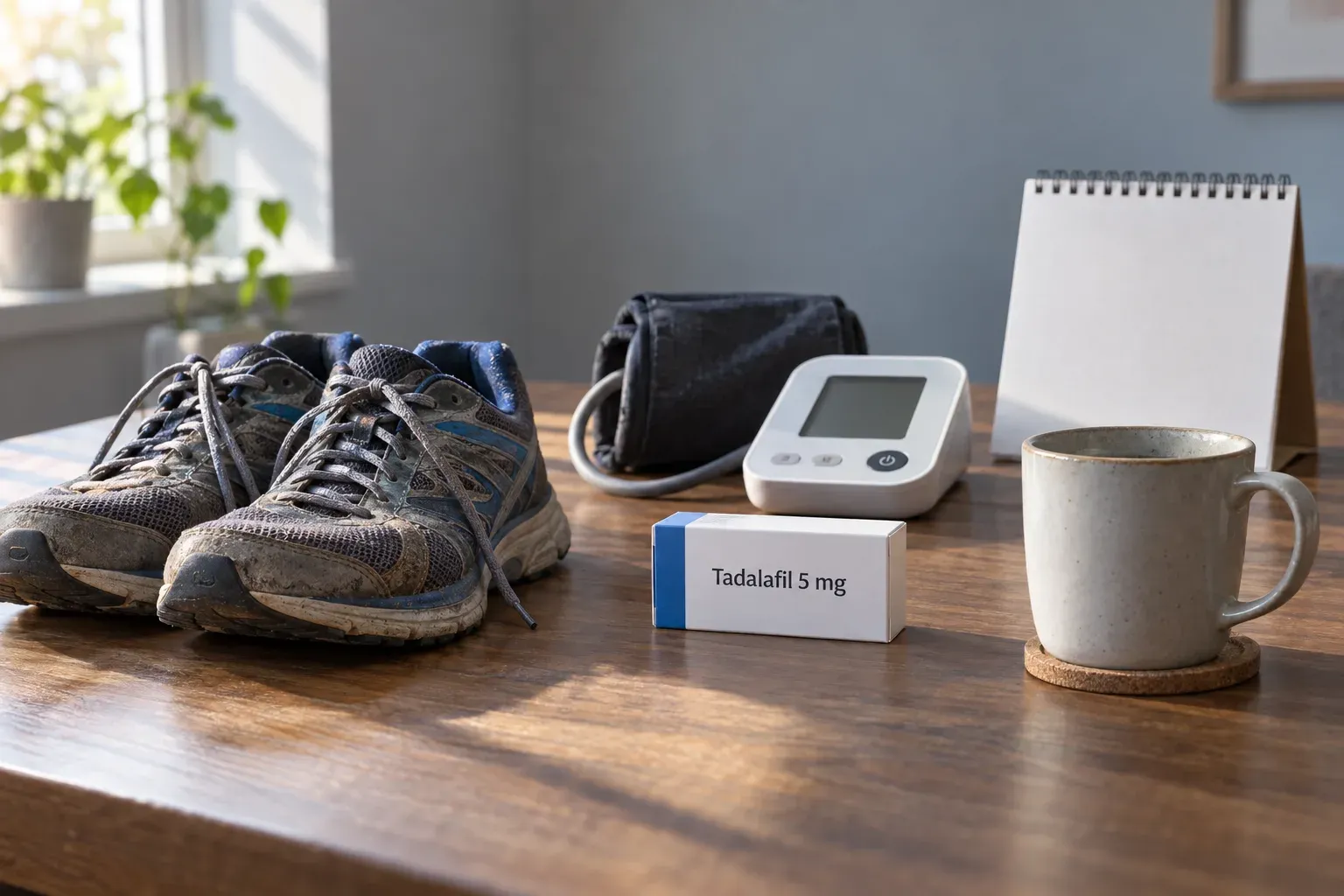
ED care in Europe involves the same core questions as elsewhere: what is contributing to the problem, which outcome matters to the person, and which locally available treatment fits their health and medicines. A single European prevalence number or a collection of anonymous stories cannot answer those individual questions.
Physical and psychological contributors can overlap
The NHS explanation includes vascular and metabolic conditions, medicine effects, anxiety and other contributors. A person can have more than one factor. An erection problem should not be classified as purely psychological simply because it varies between situations, or treated as purely physical because an oral medicine helps.
Bring the timing and pattern of symptoms, existing treatments and other medicines to a consultation. A clinician can decide which examination or investigations are relevant; a directory cannot infer the cause from a brand preference.
What European reference records contribute
The EMA records used here identify specific Viagra, Cialis, Levitra and Spedra products. They provide strong formulation and authorization evidence, while the holder, manufacturer and supplied presentation still need to be read precisely. National product information and access arrangements can differ.
A European reference label is also not a worldwide verdict on other brands. Tadacip has an Australian record, Penegra a Philippine record, and Helleva a Brazilian leaflet. Those sources improve a global reference without establishing every product’s local availability.
A practical treatment conversation
NIDDK’s treatment overview describes underlying-cause treatment, counselling, medicines, devices and surgery. These are useful categories for a discussion rather than a prescription sequence for every patient.
With oral PDE5 treatment, ask about food and formulation, the desired response window, unwanted effects and interactions. Tadalafil’s daily/as-needed choice and vardenafil’s different formulations demonstrate why the decision involves more than one timing number.
Alprostadil offers a different mechanism and several routes, each with its own training and practical burdens. The cream evidence cannot inherit injection success rates. If ejaculation control is also a concern, ED and PE require separate assessment before a fixed combination determines the plan.
Access questions worth asking
Costs, confidential consultation options and legitimate dispensing routes can affect what is workable. Ask what follow-up is available, which local product will actually be supplied and whether a verified generic is an option. A licensed product comparison is more useful than a promise that every imported pack is equivalent or that every unfamiliar name is unsafe.
Follow-up creates value
An unsatisfactory first attempt does not settle the treatment choice. Describe the exact regimen, timing, stimulation, response and adverse effects. A clinician-led reassessment study of sildenafil nonresponders shows why those details can matter, without proving every failure is an instruction problem.
Use the troubleshooting guide to prepare that conversation and the worldwide records guide to understand the product evidence. These practical questions are more useful than untraceable patient stories or unsupported percentages assigned to an entire continent.
Where to buy: generic sildenafil and vardenafil at VGR Australia, and Cialis at AU Chemist. Supply rules in your own country still apply.