
Finding medicine records around the world
Where to check a medicine’s registration: regulators in India, the UK, US, Canada, Australia, Singapore, South Korea, Brazil and more.
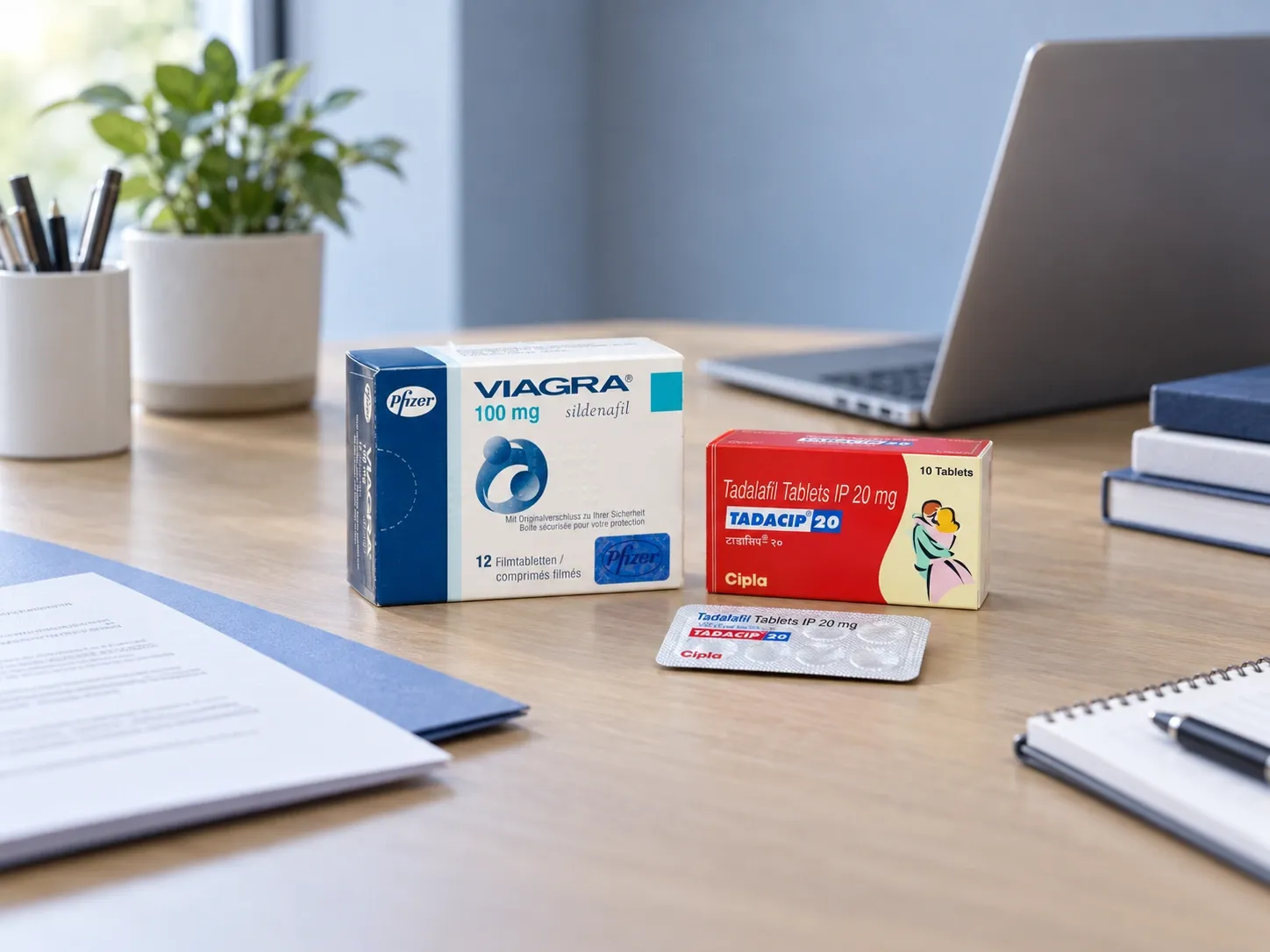
AI-generated editorial illustration. Packaging varies by market; fine print is approximate.
Viagra Labs uses English-language evidence for a global readership. A medicine missing from one country’s database is not automatically illegitimate worldwide. The useful task is to identify the ingredient, exact product and relevant local record without confusing those layers.
Three layers of confidence
An established ingredient tells us about pharmacology and studied uses. A documented company/product association identifies a named formulation. A national record and legitimate supply route address the medicine actually offered in that market. Each layer adds useful information without completing every other check.
A recognized company such as Cipla or Ajanta is a meaningful identity signal for an exact documented brand. A manufacturer, sponsor, marketer, importer and authorization holder can all be different organizations; their roles should be read as stated rather than reduced to one “maker.”
Starting points for local records
- UK — MHRA products
- US — Drugs@FDA
- Canada — Drug Product Database
- Australia — ARTG
- New Zealand — Medsafe data sheets
- Singapore — Health Sciences Authority
- Hong Kong — Drug Office
- South Africa — SAHPRA
- India — CDSCO
- South Korea — MFDS
- Brazil — Anvisa
These are discovery starting points, not claims that every product in this directory is registered there. Search tools, national versus regional procedures and the details available in each record can differ.
Read a result precisely
Match the full ingredient combination, amount and form. A tablet record does not automatically cover a jelly, and a single-strength registration does not establish the entire international range. Note the company role, record number, document date and any limitations.
Penegra illustrates a Philippine importer/manufacturer record alongside Indian pharmacy evidence. Tadacip illustrates a specific Australian record for a Cipla brand. Helleva uses a Brazilian leaflet that separates production from commercial roles.
Absence and history need careful language
Not finding a company-catalogued brand in selected pharmacy databases does not prove it is export-only. A historical catalogue is useful association evidence but not necessarily a current product listing. Dong-A’s current export table and historical Russian launch also show why “Zydena is South Korea only” was too broad.
The Indian brand guide and regional PDE5 guide apply those distinctions. A record’s scope should help a reader understand confidence, rather than become a universal approval or disapproval claim.
Sources
9 sources
Checked . This guide explains how we organize evidence; it does not assert availability, import eligibility or registration of every product in these countries.
- Central Drugs Standard Control Organisation — Central Drugs Standard Control Organisation (India)
- Ministry of Food and Drug Safety — Ministry of Food and Drug Safety (South Korea)
- Anvisa — Anvisa (Brazil)
- Tadacip 10 ARTG entry 274224 — Therapeutic Goods Administration (Australia)
- dong a global
- dong a russia
- helleva brazil label
- ema generics
- mhra online safety